Buying Waterfront Property in Manatee County
What you need to know before you buy—from flood zones and seawalls to docks, boat access, insurance and property restrictions.
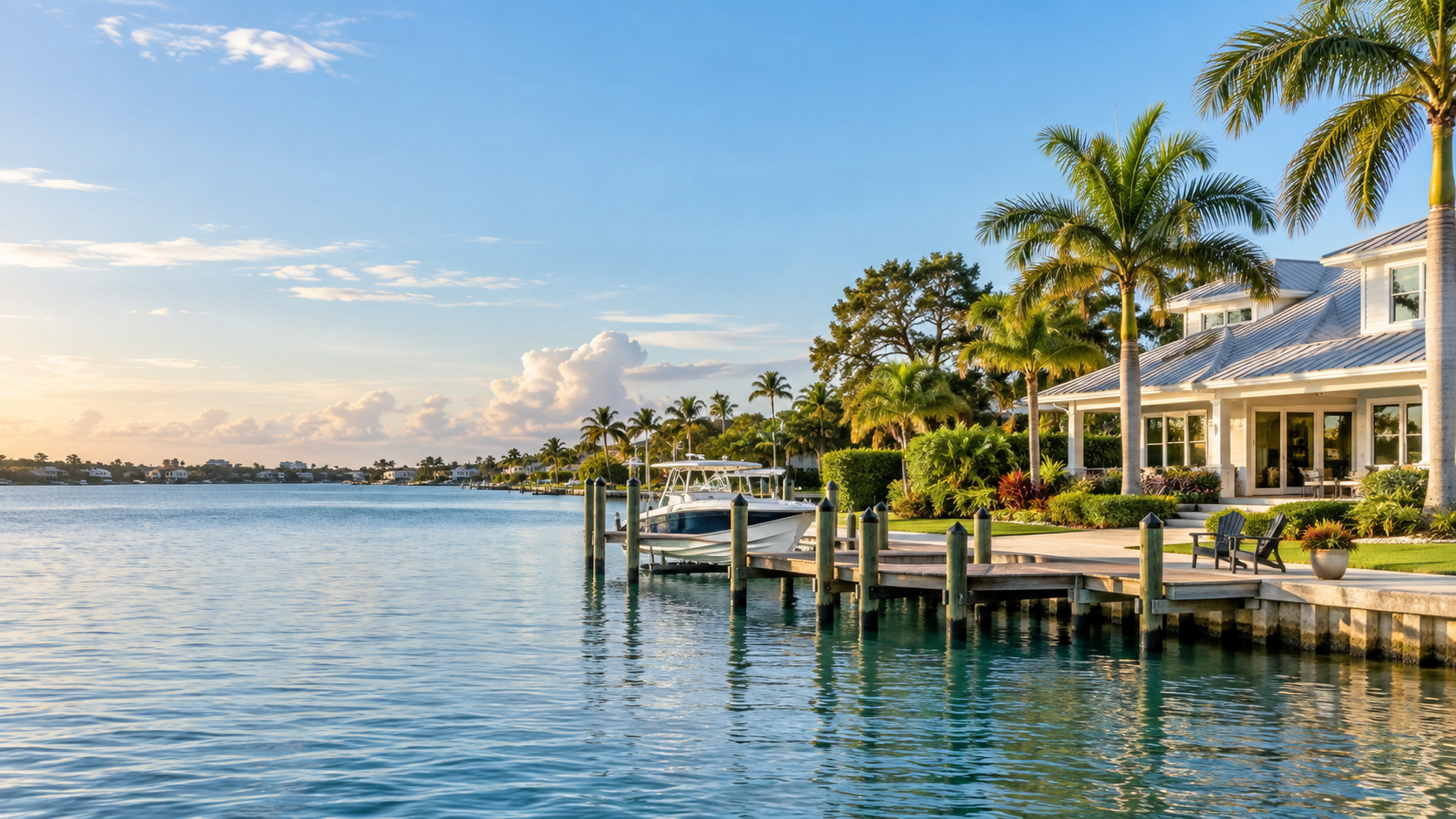
There is a reason people come to Florida dreaming about waterfront property. Morning coffee overlooking the water. A boat tied behind the house. Fishing from your own backyard. Sunsets that never get old.
But when you're buying waterfront property in Manatee County, the view is only part of what you're buying.
Two homes can sit only a few streets apart, both advertised as “waterfront,” and offer entirely different ownership experiences. One may provide direct boating access to the Manatee River and Gulf. Another may sit behind bridges that limit the size of your boat. One property may have a seawall approaching the end of its useful life. Another may have wetlands, flood considerations, or permitting restrictions that affect what can be changed in the future.
That doesn’t make waterfront property something to fear.
It makes it something to understand.
Understanding Waterfront Property Types in Manatee County
Not all waterfront properties offer the same lifestyle, boating opportunities, or ownership responsibilities. In Manatee County, buyers can choose from riverfront homes, canal-front properties, bayfront residences, Gulf-front homes, and quieter creek-front settings.
Each type of waterfront property has its own characteristics, and understanding those differences is an important part of finding the right home.
Riverfront Properties
Homes along the Manatee River offer a variety of waterfront settings, from established neighborhoods with private docks to properties with wide water views and access toward Tampa Bay and the Gulf of Mexico.
However, riverfront does not automatically mean unrestricted boating access. Water depth, bridges, tides, and the location of the property can all affect how the waterfront can be used.
Canal-Front Properties
Canal-front homes can provide the convenience of keeping a boat near your backyard, but not every canal offers the same level of access.
Some canals provide connections to larger waterways, while others may have shallow areas, fixed bridges, or other navigation limitations. Buyers should evaluate the entire route from the property to their intended boating destination.
Bayfront and Gulf-Front Properties
Bayfront and Gulf-front homes can offer expansive water views and proximity to boating, fishing, and coastal recreation.
These properties may also have additional considerations involving coastal exposure, erosion, insurance, environmental protections, and maintenance.
Creek-Front Properties
Creek-front homes can offer a quieter, more natural waterfront environment, often surrounded by mature vegetation and wildlife.
Depending on the location, a creek may provide navigable access to larger waterways or may be better suited for kayaking, paddleboarding, fishing, and enjoying the natural surroundings.
Water depth, tidal changes, vegetation, and environmental restrictions are especially important considerations when evaluating creek-front properties.
Choosing the Right Waterfront Property
The right waterfront property depends on how you intend to use it. A buyer who wants to keep a large boat behind the house may have different priorities than someone looking for peaceful water views, fishing opportunities, or a natural setting.
Before purchasing, it is important to look beyond the view and understand what the property actually offers.
Boat Access, Bridges & Water Depth in Manatee County
One of the most important questions to ask when purchasing waterfront property in Manatee County is whether the waterway will accommodate the type of boating you intend to enjoy.
A property may have a beautiful water view, an existing dock, or even a boat lift, but those features alone do not guarantee convenient access to the Manatee River, Tampa Bay, or the Gulf of Mexico.
Understanding the waterway before purchasing can help you avoid unexpected limitations.
Water Depth and Tidal Conditions
Water depth can vary considerably between waterfront properties, even within the same neighborhood.
Some canals and creeks may become too shallow for certain boats during low tide. Sandbars, shifting sediment, and seasonal changes can also affect navigation.
Before purchasing a waterfront home, buyers should consider the draft of their boat, the depth of the water at the dock, and the depth of the entire route to open water.
If boating is a priority, visiting the property during different tidal conditions can provide valuable information about how the waterway functions.
Bridge Clearance and Navigation
Bridges are another important consideration when evaluating waterfront property.
A home may offer navigable water access, but a fixed bridge between the property and open water could limit the size or height of the boat you can use.
Buyers should investigate bridge clearances along their intended route, particularly if they own a sailboat, a vessel with a tower, or a boat with a substantial overall height.
Some bridges may have movable spans, while others are fixed. Navigation restrictions and operating schedules should be verified before purchasing.
Docks, Boat Lifts, and Waterfront Improvements
An existing dock or boat lift can be an attractive feature of a waterfront home, but buyers should not assume that every structure is suitable for their intended use.
The age and condition of the dock, the capacity of the boat lift, and the location of the structure should all be evaluated.
Buyers should also investigate whether existing waterfront improvements were properly permitted and whether repairs, replacements, or modifications may require additional approvals.
A property without a dock may present opportunities for future improvements, but the ability to construct a new dock or boat lift should be verified with the appropriate permitting authorities before purchasing.
Understanding Your Boating Lifestyle
The right waterfront property depends on how you plan to use the water.
A buyer who enjoys kayaking, paddle boarding, or fishing from the shoreline may have different needs than someone who wants to keep a larger powerboat behind the house.
Before making an offer, consider how frequently you intend to use your boat, where you want to travel, and whether the property's water access will accommodate those plans.
The goal is to find a waterfront home that supports the lifestyle you envision—not simply one that offers a beautiful view.
Flood Zones & Waterfront Insurance in Manatee County
Buying waterfront property in Manatee County means understanding more than the home's location and water views. Flood risk, property elevation, insurance requirements, and potential storm exposure can all affect the cost of ownership.
Two waterfront homes in the same neighborhood may have different flood risk characteristics and insurance costs. Understanding these factors before purchasing can help buyers make informed decisions and avoid unexpected expenses.
Understanding Flood Zones
The Federal Emergency Management Agency (FEMA) maintains flood maps that identify areas with varying levels of flood risk.
Properties in designated high-risk flood areas may be subject to additional building requirements and flood insurance obligations, particularly when financing a home with a mortgage.
However, being located outside a high-risk flood zone does not mean a property is free from flooding risk.
Heavy rainfall, storm surge, tidal flooding, and drainage conditions can affect properties throughout Manatee County.
Before purchasing, buyers should review the property's current FEMA flood zone designation and investigate its individual flood risk.
Flood Insurance vs. Homeowners Insurance
One of the most important distinctions for waterfront buyers is the difference between homeowners insurance and flood insurance.
Standard homeowners insurance policies generally do not cover damage caused by flooding. Flood insurance is typically obtained separately or through an available flood coverage endorsement.
Flood insurance may be required by a mortgage lender depending on the property's flood zone, financing arrangements, and other applicable requirements.
Even when flood insurance is not required, buyers should consider whether the property's exposure makes additional coverage appropriate.
Before purchasing, request insurance quotes and review coverage limits, deductibles, exclusions, and available policy options with a licensed insurance professional.
Property Elevation and Flood History
A property's elevation can play an important role in its exposure to flooding.
An elevation certificate, when available, provides information about the height of a building relative to applicable flood elevations and may be useful when evaluating flood risk and insurance options.
Buyers should also investigate the property's known flooding history, including whether previous storms or heavy rainfall have caused water intrusion or damage.
When appropriate, buyers may wish to consult qualified inspectors, surveyors, insurance professionals, and local floodplain officials to better understand the property's conditions.
Understanding the Total Cost of Waterfront Ownership
Waterfront living can involve expenses beyond the purchase price and monthly mortgage payment.
Homeowners insurance, flood insurance, windstorm coverage, maintenance, and potential improvements to the property should all be considered when establishing a realistic ownership budget.
Insurance premiums and availability can vary based on the property's location, construction characteristics, elevation, coverage selections, and the insurer.
Obtaining property-specific insurance quotes before completing a purchase can help buyers understand the potential ongoing costs of ownership.
Making an Informed Waterfront Purchase
Flood zones and insurance considerations should be part of the waterfront buying process from the beginning.
The goal is not simply to find a home with a beautiful view, but to understand the property, its potential risks, and the responsibilities that come with owning it.
With appropriate research, inspections, and professional guidance, buyers can make decisions that reflect both their waterfront lifestyle goals and their financial priorities.
Buyers can research a property's designated flood zone using FEMA's official Flood Map Service Center.
Buyers can also research a property's flood zone using Manatee County's official flood-zone resources. Reviewing this information before purchasing can help buyers better understand the property's flood risk and potential insurance considerations.
Seawalls, Docks & Shoreline Conditions in Manatee County
A waterfront property offers more than beautiful views. For many buyers, it represents a lifestyle built around boating, fishing, outdoor recreation, and enjoying Florida's natural waterways.
However, the condition of a property's seawall, dock, and shoreline can significantly affect its long-term maintenance costs and usability.
Before purchasing waterfront real estate in Manatee County, buyers should understand the existing waterfront structures, their condition, and any limitations that may affect future improvements.
Understanding Seawalls and Shoreline Protection
Seawalls are designed to help protect waterfront property from erosion and the movement of water. They are commonly found along canals, rivers, and other developed waterfront areas throughout Manatee County.
Over time, seawalls can deteriorate due to water pressure, tidal movement, soil conditions, and exposure to the elements.
Signs of potential seawall problems may include cracking, leaning, separation between panels, soil erosion behind the wall, or areas where the surrounding ground has begun to settle.
Buyers should determine the age and condition of an existing seawall and investigate whether repairs or replacement may be necessary.
A qualified marine contractor or structural engineer can provide a more detailed assessment when concerns are identified.
Docks, Boat Lifts & Waterfront Improvements
For boating enthusiasts, an existing dock or boat lift can be an important feature of a waterfront home.
However, the presence of a dock does not automatically guarantee that it is suitable for every vessel or that future modifications will be permitted.
Buyers should consider the dock's structural condition, size, water depth, access to navigable waterways, and the capacity of any existing boat lift.
It is also important to determine whether existing improvements were properly authorized and whether permits or other approvals may be required for repairs, replacement, or expansion.
Florida's Department of Environmental Protection oversees environmental permitting for many waterfront activities. Depending on the property's location and the proposed improvements, additional state, federal, or local requirements may apply.
Buyers planning to construct a new dock or install a boat lift should investigate the applicable requirements before assuming that the improvements will be allowed.
Natural Shorelines & ErosionNot every waterfront property has a seawall. Some properties feature natural shorelines with native vegetation, mangroves, or gradual transitions between the land and water.
Natural shorelines can provide important environmental benefits, including habitat for wildlife and protection against certain types of erosion.
However, shoreline conditions vary, and buyers should investigate areas where soil loss, drainage problems, or storm-related erosion may affect the property.
Properties with mangroves, wetlands, or other protected natural features may also be subject to restrictions on vegetation removal, shoreline alteration, and construction.
Understanding these conditions is especially important for buyers who intend to clear waterfront vegetation, construct a dock, or modify the shoreline.
Questions to Ask Before Purchasing Waterfront Property
A thorough evaluation of waterfront property should extend beyond the home's interior and exterior.
Buyers should consider the following questions when evaluating seawalls, docks, and shoreline conditions:
What is the age and condition of the existing seawall or shoreline stabilization system?
Are there visible signs of erosion, settlement, or structural deterioration?
Were existing docks, boat lifts, and seawalls constructed with all required approvals?
Are there any known restrictions on repairing, replacing, or expanding waterfront structures?
Is the existing dock suitable for the buyer's intended vessel?
Are there any shared maintenance obligations, easements, or waterfront association requirements?
Have previous storms caused damage to the shoreline or waterfront improvements?
Obtaining answers to these questions before closing can help buyers better understand the property's condition, intended use, and potential future expenses.
Waterfront Ownership Requires Long-Term Planning
The beauty and recreational opportunities of waterfront living come with responsibilities that may differ from those associated with traditional residential property.
Seawalls, docks, boat lifts, and natural shorelines require periodic evaluation and, in some cases, ongoing maintenance or substantial repairs.
Understanding these considerations before purchasing allows buyers to evaluate not only the initial cost of the property but also the long-term financial and practical responsibilities of waterfront ownership.
At Property & Principle, I believe that understanding a property's unique characteristics is essential to making an informed real estate decision.
Whether you're searching for a boating property, a quiet riverfront retreat, or a home overlooking Tampa Bay, the goal is to find a property that supports your lifestyle while understanding the responsibilities that come with it.
Whit